A week of surprises

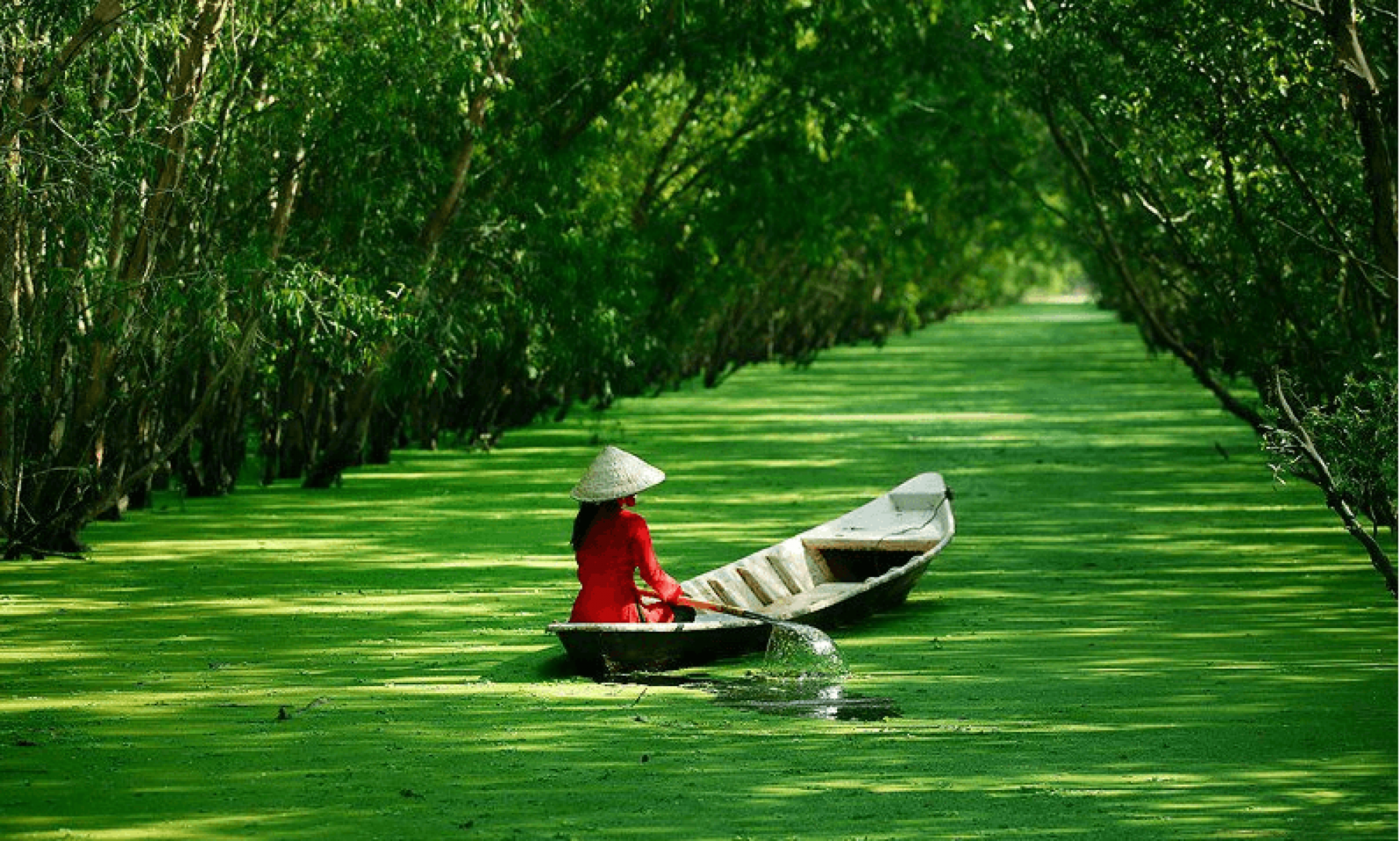
This week has been packed full of surprises and exciting experiences. Each activity has been completely different. We explored the Mekong Delta, went through villages, floated down the rivers as well as explored a fascinating floating market. One excursion that stood out to me specifically was when our tour guide loaded us on the boat and took us to a small village along the river. We climbed off the boat and walked through the village, through the trees until we arrived at this little collection of huts. It turned out, to our surprise, that it was a noodle and rice paper factory of the local area. For the rest of the afternoon the locals showed us how they made the rice paper and noodles and even were kind enough to let some of us help them make it. It was such a small but profound experience that can really sum up this past week well.

Vietnam is such a vibrant country and has severely exceeded any expectations I had. One of the things I was most looking forward to was the food in Southeast Asia. I had heard many stories about the street food in Vietnam and had very high expectations, and it is safe to say the street food here exceeded my expectations by a huge margin. I have been enjoying every bite. When you first arrive, it feels so hectic but as you adjust to the city and the country itself you begin to realize that everything is actually organized in a very chaotic way. It seems that this mindset of “organized chaos” applies to many aspects of Vietnamese lifestyles, and I look forward to starting work Monday and learning first-hand how business is done in Vietnam and possibly confirming my theory. As the summer moves on, I want to strive to learn more about Vietnam and the people within it. Questions like “What are the cultural differences between Central, North and South Vietnam?” and “How can I create more meaningful relationships with locals? “are what I hope I can answer by the end of this experience.

The Whole is greater than the sum of its parts

The most culturally informative activity was visiting the Cao Dai Holy See temple. I believe that experiencing Caodaism truly illustrated Vietnam’s distinct identity and role as a cultural melting pot. Like the Vietnamese culture’s ability to endure through millennia of Chinese dominance, it is interesting to see the regional religion of Caodaism persist with millions of followers despite the influence of today’s most prominent religions. The organizational structure inside the Cao Dai temple demonstrated the Tay Ninh people’s ability to preserve their culture by forming an adaptable religion that brought together specific tenants from different ideologies; as the saying goes, the whole is greater than the sum of its parts. Most importantly, the Holy See temple was culturally informative because it illustrated Caodaism as an intersection of the organizational hierarchies found in western religions, like Catholicism, and the moral philosophies of eastern ideologies, like Confucianism and Taoism.

One of my first impressions of Vietnam was that the city of Saigon was rapidly growing and arguably quite modern. I was shocked by the number of skyscrapers and overall size of the city seen from the sky as my airplane flew down into the airport. This completely surpassed my expectations of Vietnam as a country that is only beginning to experience its first steps towards modernization, such as the region I saw the last time I visited India. Another first impression of Vietnam was that the people were much more friendly than I anticipated. Whether its communicating with my Grab driver or asking locals about their opinion on the price of a specific item at the Ben Thanh Market, the Vietnamese people make foreigners feel welcome. The intersection between Vietnamese people’s modesty to “save face” while still being prideful about their unique culture has genuinely impressed me and illuminated a new perspective.       

Some cultural questions I would like to address during my time in Vietnam are:

  • What are the small things people do daily to “save face?”
  • What are the cultural ceremonies and festivals that are important to the community?
  • What do Vietnamese people define as success?
  • What are common misconceptions about the Vietnamese culture?
  • How do the Vietnamese people balance between Communist nationalism and growing capitalism?

Diving into the unknown

Before coming to Vietnam, I did not know much about the country or its culture, I only knew what I had learned in the pre-departure class. Although many people discouraged me from coming due to safety concerns, as soon as I arrived, I felt extremely welcome and safe. Being from a communist country, I expected Vietnam to be similar to Cuba, but my first impression exceeded my expectations. Comparing the two countries, Vietnam is much more developed and capitalized. I did not expect our amenities to look so nice, the city to have so many luxuries cars, or the internet to be so fast. Additionally, although there are nearly 10 million mopeds, the traffic isn’t as bad as I expected because in the middle of all the chaos there are unspoken traffic rules that drivers abide by.

On our 5th day in Saigon, the group drove out to Tay Ninh to go see a religious Cao Dai ceremony and go hike Black Lady Mountain. In my opinion, the ceremony was more culturally informative than the other activities we did because I was not aware of this religion and having the first-hand experience of being present at the service left a lasting impression. Our tour guide, Mr. Long, explained that the religion was created in Southern Vietnam and they believe that God is represented by a Divine Eye which is why in the temple there are approximately 6 eye paintings on the walls. He also mentioned that Cao Dai is influenced by many religions such as Catholicism and Buddhism which surprised me because they are so different.

After the service, we went on a hike which gave me time to think about my first couple of days here. After interacting with locals on my way up and getting asked to take pictures, I wonder why they are so intrigued by foreigners? Additionally, when we were on the food tour, I mentioned that I wanted to get tan and Nhu, one of our program directors, gave me a strange look and asked: “Why?” My friend Minh Thy, also mentioned that many Vietnamese wear sweaters in hot weather to block their skin from the radiation and maintain a lighter skin tone. So, my question is, why are Asians infatuated with maintaining a light skin tone? Lastly, I know that tipping isn’t expected in Vietnam, but I have been told that in certain situations we are supposed to. How do I know in which situations I should tip?

Becoming one with water

Before we left for Vietnam, we learned that Vietnamese culture can be compared to a river that flows around a boulder; rather than create a rigid and unwavering strategy to avoid obstacles, solving problems in Vietnam requires fluidity. The Vietnamese value flexibility in their planning and can readily adapt to overcome adversity.

This quality is evident in the floating markets of the Mekong Delta, where locals have developed a lifestyle that allows them to thrive despite the frequent flooding of the Mekong River. The Cai Rang floating market, which we visited on Wednesday, is a major wholesale market where vendors can sell a variety of fruits, vegetables, and meats to more than five hundred tourists each day. Watching residents of Can Tho navigate the murky waters of the Mekong River in rickety wooden boats offered us a unique perspective of Vietnamese culture, brought about by the ability to, quite literally, go with the flow. 

Just as the Mekong Delta region of Vietnam has constructed an economy to accommodate an ever-changing climate, in the last twenty years the national Vietnamese economy has abandoned its isolationist policies to compete in an increasingly globalized world. Considering that Vietnam did not participate in international trade until the 1990s, the country is more receptive to tourists than I had anticipated. The Vietnamese are extremely friendly and are generally able to communicate in English; we have been offered directions and travel tips and frequently been asked to stop and pose for a picture.

As the business hub of Vietnam, Ho Chi Minh City (HCMC) is characterized by skyscrapers and shopping malls, similar to many large cities in the United States. However, the economic disparity between the city center and its outskirts is significant. As you drive further towards the edges of HCMC, tin roofs, chipped paint, and crumbling buildings become commonplace. In the city’s center, buildings can be expected to include air conditioning and indoor plumbing – both of which are luxuries not easily found in the countryside. Hopefully, Vietnam will see a reduction in inequality as it continues to adapt to international markets and grow its economy on a global scale.

Welcome to Vietnam

Throughout the first week exploring the beautiful city of Saigon and its surrounding area, we participated in various culturally enriching events, but one particularly touched me, meal time. The concept of a meal is one that contains differing meaning in different cultures and throughout the first week I got a glimpse into the importance of food in the Vietnamese culture. The Can Tho floating market on the Mekong River Delta embodies the daily life of many in Vietnam, notably highlighting the value of a meal. One can purchase fresh fruits, Vietnamese coffee, and meals prepared fresh on board a small three-meter boat from a variety of different vendors at the Can Tho floating market. The real epiphany occurred to me when I watched one particular woman cooking on her boat. She seemed to be an older woman, short, dressed in long flowing black pants and long-sleeved floral shirt. Her expression was that of a smile, consumed with the bliss of preparing food for others. Through the chaotic exchange of money and food this woman stood out in particular to me. Her way of life was dependent on the preparation and sale of food. The time and artistry put into making each bowl of soup and grilling each skewer of chicken all aboard a small boat left me aghast. This experience shed perspective on the way I view Vietnamese culture, particularly when it comes to food. Food here is a product of hard work, time, and dedication. Though rice is abundant at most meals, its presence is respected. The Vietnamese are morally grateful of food, appreciating its pure origins and labor-intensive processes. An invitation to share a meal is seen as a kind gesture and leaving rice in your bowl is viewed as a harsh superstition. All in all, the various encounters with food I have experienced so far has expanded my outlook on something that many take for granted, a fresh meal.

My first impressions of Vietnam have been blown away. Coming in as an obvious outsider, I thought that I would be treated in low disregard. My preconceived notions are false. Every individual I have come into contact with, whether it be on the street selling food or in a grab has been nothing but kind. The Vietnamese culture is very welcoming, making it an exciting endeavor to explore the city. The chaotic city of Saigon is consumed with vespas, construction, and hole in the wall establishments, yet possesses an overwhelmingly positive character of bewilderment that is indescribable. I am so excited to begin my journey here in Saigon with such beautiful beginnings. I hope to learn more about the importance of work in the locals daily lives here in Vietnam and to what extent the changing modernity of the city effects locals here in Saigon over the next two months.

Experiencing Vietnam with no expectations

In the short period that I have been in Vietnam, the country has already surpassed my expectations. Since day one of culture week, our schedule has been packed with activities that have allowed me to gain a more profound understanding of the Vietnamese culture. 

From previous experience, I have learned that going to markets is one of the most effective ways to gain insight on a country and its culture. This was definitely the case for the Cai Rang floating market in Can Tho. Being on the river, viewing locals buying and selling goods, and purchasing an item myself helped increase my awareness of the local culture and how it has adapted to the surrounding geographical features. In fact, the entire Cai Rang Floating Market Tour was culturally informative starting from the early morning bus ride. During the ride, I noticed that the city was very much awake at 6:00 AM. There were already plenty of locals walking on the streets and some even doing outdoor morning exercises. When we arrived to the river at around 7:00 AM, the market was flourishing with boats and people working arduously to sell their products. Observing this proved to me that Vietnamese people are determined, hardworking, and start their days earlier than we do in America. I also enjoyed seeing the traditional rice noodle factory at one of our stops at the Mekong Delta and how packaged products are put together by hand, something that is not as prominent in America. Roaming through the village gave me a sense of what life truly is like in the less developed areas of Vietnam, a stark contrast from the commotion of Saigon.

When I mentioned to others that I was planning to travel to Vietnam, I received plenty of negative comments. Instead of taking these remarks into account, I strived to arrive without any expectations, causing me to be very impressed with the country as a whole. Saigon is much more modern, diverse, clean, and even larger than I initially expected. Although I am a foreigner, I have only been treated with respect and feel safe even in the more hectic areas of the city. I also imagined there to be a single hub with most of the shops and nightlife (like a downtown area in American cities). However, areas like these are spread out throughout the entire city, and this makes it simple to always find something to do. In addition, the skyline of Saigon left a lasting impression on me from the rooftop of a tall building. The city appeared vast and there were evident contrasts between building heights. This represented the rapid development of the country to me and I am eager to see how this view changes over the years.         

Because of the advancements that Vietnam is experiencing, it makes me wonder how this rapid development has been affecting the culture. Are Vietnamese traditions still strong amongst young people? Which countries have had the most influence in regards to culture in Vietnam? What do people my age enjoy doing in their free time, and are these activities changing alongside Vietnam’s development?

Vietnam Week 1

Mr. Long

Our tour guide Mr. Long was the most culturally informative component of our entire first week. He often went into detail on many aspects of Vietnamese Culture that a Westerner would have a very difficult time discovering on his/her own. When we would arrive at the various destinations, he had planned for us, he would provide stimulating facts on various subjects. Some of the most memorable moments include our visit to the Vietcong tunnel system, the world-famous Vietnamese water puppet show and our snake wine tasting.

First Impressions – HCMC

            I love Saigon (Ho Chi Minh City). The city, culture, people, food and more have far exceeded my expectations. I am so happy with the selections. This megacity has something new to offer at every corner. During the first few days we visited the French district, here in Ho Chi Minh city, and explored the area thoroughly spending almost an entire day at attraction like the French Cathedral and French Post Office. Around this same area we explored a shopping leisure area I which I found emulated Las Ramblas of Barcelona. Later in the week we return to this very same district near the very same areas we ventured only to discover even more great sights to see. During our second walking tour of this district we spent time at a local park learn foot badminton from locals, walked the streets of a famous book market and took an elevator 36 storied to a roof top bar with an excellent view of the entire city as well as a glass bridge that scared even the bravest of us.

Questions

 Although we have gone over this many times, I am still uneasy about the tipping culture. Although in most instances tip is not required and often rejected there have been instances where tipping is appropriate, or I feel the service is worthy of it. What is the customary tipping amount? Is this an ignorant question? I feel like this may also be one of my American habits that I have that I am just having a very hard time breaking.

How does the Vietnamese work place compare to the American work place? What sort of relationships are developed in the Vietnamese work place? Is it appropriate to ask my colleagues or bosses out to happy hour after work?

Surpassing No Expectations

Oh, what a week it has been. I’ve been in Vietnam for 10 days now and to say that we’ve done a lot would be an understatement. I think a lot of people on this trip would agree with me that they feel like they have been here for 2 months already. The cultural week that we did was amazing. Lead by our tour guide Long we were able to fully immerse ourselves in the Vietnamese culture and history. Specifically, one day that was culturally informative to me was our trip to the war museum and our trip to the Cu Chi District. On this trip I was able to learn more about the history of the Vietnam War but from a different perspective. I saw the many different war crimes committed and the tactical strategies both sides used during the war. I saw the effects of the deadly American chemical weapon Agent Orange and how they effected the kids and families not only during the war but after as well. In the Cu Chi District I saw firsthand the strategies the Vietnamese had when it came to engaging in warfare with the Americans. I crawled in the tunnels carved out by the former Vietcong army and was able to see how brilliant these people were.

I’ve only been here for 10 days but I can confidently say that Vietnam is an amazing country. I didn’t have that many expectations of the country prior to my arrival however every day there is always something new and exciting. The traffic is chaotic and unregulated, the people are friendly and nice, and the country’s potential for growth seems almost limitless. With everything I am learning about Vietnam I know that in 10-15 years Vietnam is going to make its presence known on the world stage not just in South East Asia. Going forward I hope to understand more about the culture.  A few cultural questions I would like to have answered is how natives feel towards Americans and what things are considered taboo in Vietnam.  I hope to make a couple of Vietnamese friends during my trip as well as talk to the expats here. I can tell that I am going to have a lot of fun during this trip I’m excited for what’s to come.

New City, New Challenges, New Opportunities

If there’s anything I’ve learned this past week during my class in Vietnamese history and culture is that Vietnam is both a culturally rich and aesthetically captivating country. The most interesting thing that I learned about the Vietnamese culture is how important the concept of ‘saving face’ is. In his article “Saving Face and Losing Face: How the Concept of Face Will Affect Your Travels in Asia” Greg Rodgers describes face as a combination of social standing, reputation, influence, dignity, and honor. Causing someone to lose face lowers them in the eyes of their peers. Saving face or “building face” raises their self-worth—obviously a better outcome for everyone. This is a crucial part of Asian etiquette. As someone who grew up in America around western social norms the way we act in the U.S with others is often with brutal honesty and a get-right-to-the-point attitude which is strikingly different than in Asia with their eastern social norms. The Vietnamese value relationships above all and will often make small talk before business in order to build respect and personal trust. However we are not all that different as we do share cultural similarities with Vietnam in our economic system.

Capitalism is alive in well in Vietnam. With two-thirds of the Vietnamese population born after the fall of Saigon (Ho Chi Minh City) and the reunification of Vietnam in 1975 the young people in the south embody a spirit of optimism and innovation. The Vietnam economic reforms of 1986 called Đổi Mới created a “socialist-oriented market economy” which helped deliver an average of 7 percent annual growth in GDP over the past decade. The future is bright in Vietnam with the country finally at peace after many centuries of wars, occupation, and entanglements with foreign armies. Part of their recent economic success might be due to the Vietnamese values.

Compared to the U.S the Vietnamese culture is strongly group-oriented where individual preferences are considered far less relevant than group harmony and synergy. Contrastingly, in the U.S we value individualism and independence which is often the goal for many American parents when it comes to their children’s upbringing and future. These cultural difference may have an impact on my professional experience during my internship this summer in Siagon. In the U.S there is pressure on individual performance and what we can each can bring to the table that’s unique and different than anybody else. However since I’ll be working in Vietnam I’m assuming what will matter in the workplace is not how I perform personally but rather how I can work with my team to produce quality work for the good of the company whether that be contributing to ideas or completing group tasks. This may also influence my personal experience because I’m going to need to get good at decoding feedback on my work and determine whether it’s either good or bad because saving face is going to be very important to my coworkers and supervisors. In the U.S it’s not difficult to receive constructive criticism from your higher-ups but in Vietnam they’ll probably dance around delivering criticism. However with that being said I’m excited for what the future holds and can’t wait to experience Vietnamese culture and history. Hẹn gặp lại!

Freedom and Change

We just recently wrapped up our week of pre-departure courses, and it was a fun and enlightening experience. In addition to learning some important historical, political, and economic facts about Vietnam, we were given a helpful brush-up on the social and cultural nature of the country as well. There were some similarities to the United States, especially the entrepreneurial and capitalist spirit seen in younger cities like Saigon, but I found the differences to be much more numerous. Of the differences, the one I found most surprising and interesting was the traffic law — or lack thereof. Cars, motorcycles, bicycles, and pedestrians all weave around each other in a perilous dance, moving dangerously close to one another. Motorcycles often have heaps of items, or several passengers, loaded onto their backs. Even the sidewalks, which are here considered to be a safe haven for those who walk, are free game for motorcycles. But where this effects me is in the act of crossing the street. To do so, one must simply step forwards slowly and move consistently without stopping, and the vehicles will all simply move around you — indoctrinating you into its flow. It will certainly be a bit stressful the first few times — it really does feel like the ultimate form of trust exercise, except I’m performing it with complete strangers — but I believe I’ll adjust rather quickly, and I look forward to showing others how it’s done when I visit again in the future. 

This tiny detail, however, is indicative of one larger difference between the United States and Vietnam. Here in the United States, and many other Western nations, we aren’t adequately prepared to deal with uncertainties or chance – such factors are a huge source of stress for us. Because of this, we attempt to control everything around us, in order to limit such uncertainty and mitigate that stress. A button to press,  a corresponding beeping noise, a light to signal to us that we can safely walk — even though we don’t really have control of traffic, such presences help give us the illusion that we can, and as a result, crossing the street isn’t something we need to fret much about. In Vietnam, you don’t really have control of the situation at all, and yet this is something people are comfortable dealing with.

One trait of Vietnamese culture we learned about is that it’s much more welcoming to uncertainty. People are comfortable with it, and more readily able to adapt to change as it arrives instead of expending energy preparing for such contingencies. I expect times in Vietnam when things don’t go according to plan, both in the workplace and in day to day life. There may be times where my professional role is shifted or broadened to accommodate unexpected developments in the business, for instance. But I look forward to embracing these sudden occurrences, and learning to live in the present rather than the future. 

Design a site like this with WordPress.com
Get started